Stochastic volatility refers to random fluctuations in volatility, using probabilistic methods to solve problems, as in simulated annealing, with random phenomena involved, and probability distributions followed, in artificial intelligence, with stochastic programs working, and random trials based stochastic models used․
Definition of Stochastic Volatility
Stochastic volatility is a mathematical concept that describes the random nature of volatility in financial markets, where future states are not fully determined but follow probability distributions, and is often used as a counterpart to deterministic models, which do not involve random phenomena, with stochastic models being based on random trials, and stochastic processes depicting how a system changes over time, explaining how a system’s state varies at different times or locations, frequently in unforeseen ways, and is connected to the art of guessing, with major motivations for its development being the calculation of odds for gambling, and the question of fair prices, and is used in technical analysis to confirm trends, spot divergences between price and momentum, and anticipate potential changes in market conditions, with the stochastic oscillator being a core tool in modern technical analysis, and stochastic models being used to price options and other financial instruments, with physics-informed neural networks being used to solve complex problems in finance, and automatic differentiation being used to compute gradients and other quantities in stochastic models, with stochastic volatility being an important concept in finance, and is used to model real-world phenomena, such as stock prices and interest rates, and is essential for making informed investment decisions, with stochastic models being used to analyze and predict future market trends, and identify potential risks and opportunities, with stochastic volatility being a key component of modern finance, and is used to price options and other financial instruments, with stochastic models being used to model real-world phenomena, such as stock prices and interest rates, and stochastic volatility is essential for making informed investment decisions․

Stochastic Process and Its Application
A stochastic process is a set of random variables that depicts how a system changes over time, with probability theory involved, and is used in technical analysis to confirm trends and spot divergences, with stochastic models being based on random trials, and automatic differentiation used to solve complex problems in finance, with stochastic processes explaining system changes over time․
Random Variables and Probability Distributions
In the context of stochastic volatility, random variables play a crucial role in modeling volatility as a random process․ Probability distributions are used to describe the behavior of these random variables, with parameters such as mean and variance being estimated from historical data․ The probability distribution of the underlying asset is also an important factor in option pricing, with stochastic models incorporating random variables to capture the uncertainty of financial markets․ Common probability distributions used in stochastic volatility models include the lognormal distribution and the normal distribution, with parameters being estimated using maximum likelihood estimation or Bayesian methods․ The choice of probability distribution can significantly impact the accuracy of option pricing models, with stochastic volatility models providing a more realistic representation of financial markets by incorporating random variables and probability distributions․
The use of random variables and probability distributions in stochastic volatility models allows for the simulation of different scenarios, enabling investors to hedge against potential losses and managers to optimize their portfolios․ The application of stochastic volatility models in finance has been widespread, with investors and managers using these models to make informed decisions about investments and risk management․ The importance of random variables and probability distributions in stochastic volatility models cannot be overstated, as they provide a powerful tool for modeling and analyzing financial markets․

In conclusion, the use of random variables and probability distributions in stochastic volatility models is a crucial component of option pricing and risk management in finance․ The accuracy of these models depends on the choice of probability distribution and the estimation of parameters, with stochastic volatility models providing a more realistic representation of financial markets by incorporating random variables and probability distributions․ The application of these models in finance has been widespread, with investors and managers using these models to make informed decisions about investments and risk management․

Stochastic Models in Finance
Stochastic models in finance use random variables to capture market uncertainty, with parameters estimated from historical data, and simulations run to forecast future outcomes, using probabilistic methods to solve complex problems in option pricing and risk management․
European Options Pricing Under the Heston Model
The Heston model is a stochastic volatility model used to price European options, it extends the Black-Scholes model by incorporating time-varying volatility, with volatility following a mean-reverting process, and option prices computed using numerical methods, such as finite difference or Monte Carlo simulations, to estimate the expected payoff of the option, under the risk-neutral measure, with parameters calibrated to market data, to obtain accurate prices for European options, and other derivatives, with stochastic volatility, using the Heston model formula, for option pricing, with stochastic volatility, in financial markets․

Stochastic Oscillator in Technical Analysis
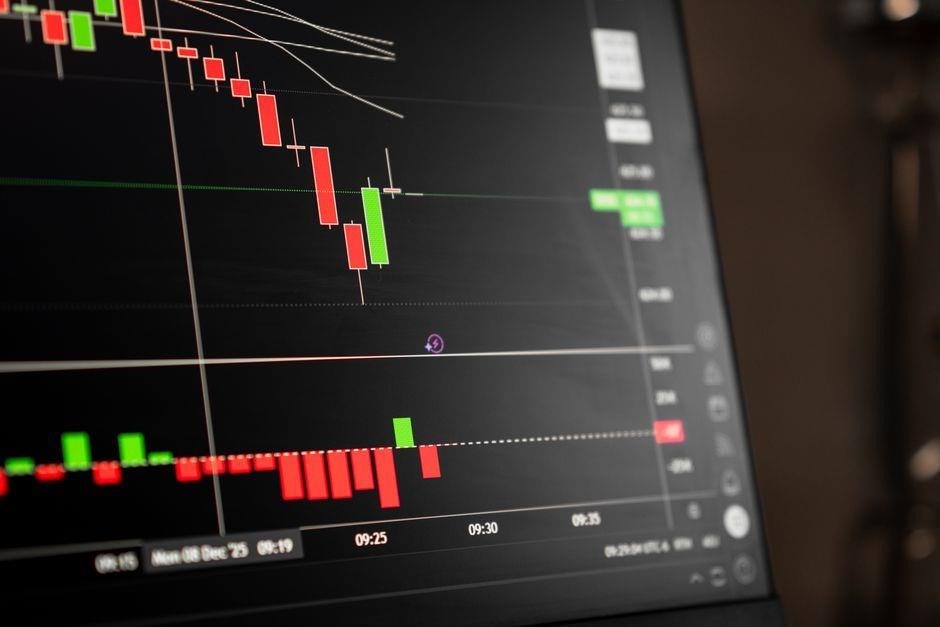
The stochastic oscillator is a technical indicator used to compare the closing price of a security to its price range over a given period, to identify overbought and oversold conditions, with trends and divergences analyzed, using charts and graphs, to predict future price movements, with traders using this indicator to make informed decisions․
Confirming Trends and Spotting Divergences
The stochastic oscillator is used to confirm trends and spot divergences between price and momentum, with bullish and bearish divergences indicating potential reversals in trend, and traders using this indicator to identify overbought and oversold conditions, with charts and graphs used to visualize the data, and technical analysis used to interpret the results, to make informed decisions about buying and selling securities, with risk management techniques used to minimize losses and maximize gains, and traders using this indicator to stay ahead of the market, with real-time data and advanced analytics used to inform their decisions, and stochastic volatility models used to predict price movements, with option pricing formulas used to calculate the value of options, and traders using this information to make informed decisions about investing in options․

Physics-Informed Neural Network Algorithm
The algorithm uses automatic differentiation for option pricing, with neural networks trained on market data to predict price movements, and physics-informed methods used to improve accuracy, with results showing improved performance in option pricing tasks, using stochastic volatility models to inform the algorithm․

Automatic Differentiation for Option Pricing
The automatic differentiation method is used to compute gradients of option prices with respect to model parameters, allowing for efficient calibration of stochastic volatility models, and improved accuracy in option pricing, with applications in finance and risk management, using neural networks and physics-informed methods to enhance the option pricing process, and provide more accurate results, with less computational cost, and faster convergence, making it a valuable tool for financial institutions and investors, to make informed decisions, and manage risk more effectively, with automatic differentiation being a key component of modern option pricing methods, and stochastic volatility models, and continuously evolving to meet the needs of the financial industry, and provide more accurate and reliable results, with increased efficiency and productivity, and reduced costs, making it a crucial tool for financial professionals, and investors, to stay ahead of the curve, and make informed decisions, with confidence and accuracy․
Path-Dependent Volatility Model
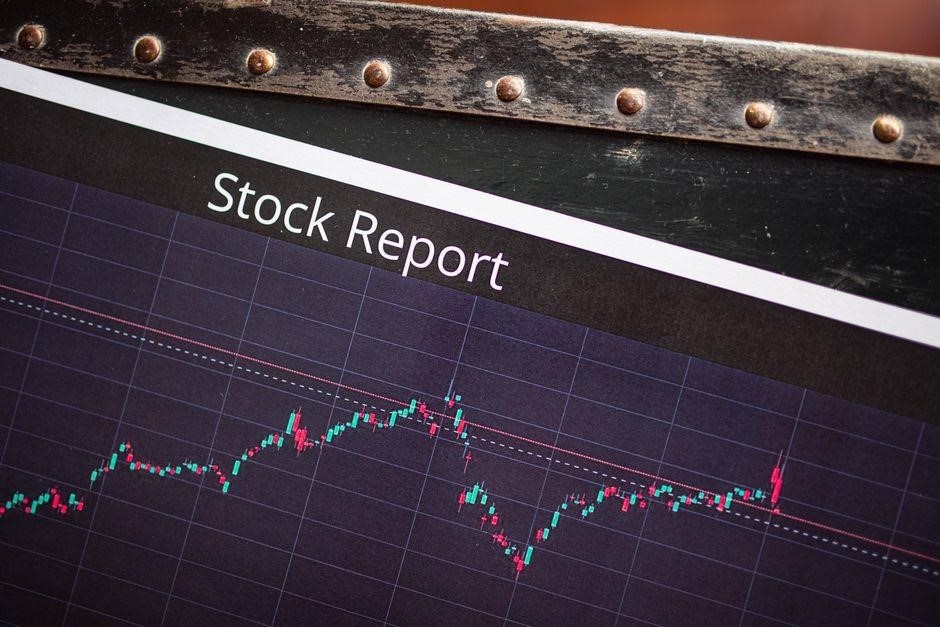
The path-dependent model accounts for volatility changes over time, using stochastic processes to simulate price movements, and calculate option prices with accuracy, in financial markets, with applications in option pricing and risk management;
Application in Natural Gas Markets
The natural gas market is a complex system with volatile prices and uncertain demand, where stochastic models can be applied to forecast price movements and manage risk, using path-dependent volatility models to simulate price paths and calculate option prices, with applications in hedging and speculation, and implications for energy policy and market regulation, as discussed in recent studies, with results showing improved accuracy in price forecasting and risk management, and potential for future research in integrating stochastic models with machine learning and artificial intelligence techniques, to enhance predictive power and decision-making in natural gas markets, with far-reaching implications for energy markets and global economy, and requiring further investigation and analysis to fully understand the complexities of natural gas markets and stochastic volatility, with potential for practical applications in energy trading and risk management, and contributing to the development of more accurate and reliable models for predicting price movements and managing risk in natural gas markets․

on Stochastic Volatility Formula
The stochastic volatility formula provides a powerful tool for option pricing and risk management, with applications in finance and energy markets, using probabilistic methods to model and analyze volatility․
Importance of Stochastic Volatility in Option Pricing
The importance of stochastic volatility in option pricing cannot be overstated, as it allows for more accurate modeling of financial markets, and provides a framework for managing risk and uncertainty;
With stochastic volatility, option prices can be calculated using probabilistic methods, such as Monte Carlo simulations and finite difference methods, which account for random fluctuations in volatility․
This approach is particularly useful for pricing exotic options and other complex derivatives, where traditional models may fail to capture the underlying dynamics of the market․
Furthermore, stochastic volatility can be used to analyze and manage portfolio risk, by simulating different scenarios and estimating the potential impact of volatility shocks on portfolio performance․
Overall, the importance of stochastic volatility in option pricing lies in its ability to provide a more realistic and accurate representation of financial markets, and to enable more effective risk management and portfolio optimization strategies․