
Kelvinator Air Conditioner Remote Manual: A Comprehensive Guide
This guide provides detailed instructions for your Kelvinator air conditioner remote, covering operation, troubleshooting (like the E7 error code), and features like turbo and sleep modes.
Understanding Your Kelvinator Remote
Your Kelvinator remote control is the central hub for managing your air conditioner’s functions, offering convenient control over temperature, fan speed, and operational modes. It’s designed for ease of use, featuring clearly labeled buttons for power, mode selection (Cool, Heat, Fan, Auto), and temperature adjustment. The remote utilizes a 4000-code database, ensuring compatibility across various Kelvinator models, and often includes a helpful auto-search mode for simplified setup.
A backlit display enhances visibility, while features like a temperature lock prevent accidental changes. Understanding the display indicators – including those for timer settings, self-cleaning operation, and error codes – is crucial for effective troubleshooting. Proper battery installation and replacement are essential for optimal performance. The remote’s ability to display room temperature, even in fan mode, adds to its functionality. Familiarizing yourself with these aspects will maximize your comfort and control over your Kelvinator air conditioning system.
Remote Control Overview & Key Functions
The Kelvinator remote boasts several key functions for optimal climate control. The primary ON/OFF button initiates and terminates operation, with the ‘ON’ symbol displaying permanently during active use. Mode selection buttons allow switching between Cool, Heat, Fan, and Auto modes, enabling customized comfort. Temperature adjustment controls facilitate precise temperature settings, displayed on the remote’s screen.
Fan speed control offers varying airflow intensities. Dedicated timer buttons enable setting both on and off timers, with default times often around 8:00 AM and a customizable sleep timer up to 8 hours. The Turbo button provides rapid cooling or heating, while the Sleep mode adjusts temperature for comfortable nighttime operation. A self-clean operation indicator signals when the unit is undergoing cleaning. The remote also features a temperature display and, in some models, a self-diagnostic code display for troubleshooting.
Battery Installation and Replacement
Proper battery installation is crucial for reliable remote operation. To install, carefully remove the back cover of the wireless remote control. Insert new batteries, ensuring correct polarity as indicated inside the battery compartment. Avoid mixing old and new batteries, or different battery types. After inserting the batteries, the remote should function immediately, potentially displaying self-diagnostic codes briefly.
When replacing batteries, always use the correct size and type as specified in the manual. Dispose of used batteries responsibly, avoiding disposal as unsorted general waste; utilize designated collection points for battery recycling. Reattach the back cover securely after battery installation. If the remote fails to operate after battery replacement, double-check the polarity and ensure the batteries are fresh. A weak battery signal can cause erratic behavior or complete failure.
Basic Operation: Powering On/Off
The Kelvinator air conditioner is primarily controlled via the power button on your remote. Pressing this button initiates the ON/OFF cycle for the unit. Upon initial power-up, the “ON” symbol will typically display permanently, indicating the air conditioner is in standby mode and ready for operation. Subsequent presses of the power button will toggle the unit between operational and off states.
Ensure the remote is directed towards the air conditioner’s receiver for reliable communication. If the unit doesn’t respond, verify battery functionality. In Auto mode, pressing the AUTO/STOP button will initiate or terminate automatic operation, allowing the air conditioner to select the appropriate cooling or heating mode. Remember to allow a brief period for the unit to fully power down or up after each button press.
Mode Selection: Cool, Heat, Fan, Auto
Your Kelvinator remote offers several operating modes to suit your comfort needs. The ‘Cool’ mode provides cooling functionality, reducing room temperature. ‘Heat’ mode activates the heating function, warming the air. ‘Fan’ mode circulates air without temperature adjustment, displaying the room temperature on the remote’s screen during operation. Selecting ‘Auto’ mode allows the air conditioner to intelligently choose between cooling and heating based on the ambient temperature.
To switch between these modes, use the dedicated mode selection button on your remote. The currently selected mode will typically be indicated by a corresponding icon on the remote’s display. In Auto mode, the unit automatically selects the optimal setting. Remember that some modes, like heating, may not be available depending on your specific Kelvinator model.
Temperature Adjustment & Display
Adjusting the desired room temperature is simple with your Kelvinator remote. Dedicated ‘Temperature Up’ and ‘Temperature Down’ buttons allow precise control. The remote’s display clearly shows the currently set temperature, ensuring you’re always aware of your chosen setting. In ‘Fan’ mode, the display will show the current room temperature, providing a useful reference point.
The temperature is typically displayed in Celsius (°C), but some models may offer a Fahrenheit (°F) option. The remote’s display provides a visual confirmation of each adjustment. Ensure the displayed temperature aligns with your comfort preference. The unit will then work to achieve and maintain that temperature. Accurate temperature display is crucial for efficient and comfortable climate control.
Fan Speed Control
Your Kelvinator remote offers multiple fan speed settings to customize airflow. Typically, these include ‘Auto’, ‘Low’, ‘Medium’, and ‘High’ options, selectable via dedicated buttons on the remote. ‘Auto’ mode intelligently adjusts fan speed based on the temperature difference between the setpoint and the room temperature, optimizing comfort and energy efficiency.

Manually selecting a fan speed allows you to prioritize either quiet operation (Low) or rapid air circulation (High). The current fan speed is usually indicated on the remote’s display. Experiment with different settings to find the ideal balance between comfort and noise level. Proper fan speed control contributes to a more pleasant indoor environment and can help reduce energy consumption by avoiding unnecessary high-speed operation.
Timer Functions: Setting On/Off Timers
Kelvinator remotes feature convenient timer functions for automated operation. You can set both ‘On’ and ‘Off’ timers, allowing the air conditioner to start or stop at pre-defined times. Default times are often 8:00 AM for ‘On’ and a later time for ‘Off’, but these are easily adjustable using the remote’s timer buttons.

To set a timer, typically you’ll press a ‘Timer’ button, then use the arrow keys to adjust the hour and minute. Confirm your settings, and the timer will activate. The remote display will indicate when a timer is active, often with a clock symbol. This feature is excellent for pre-cooling or heating a room before you arrive or for automatically turning off the unit while you sleep, saving energy and enhancing comfort.
Sleep Mode: Configuration and Benefits
Kelvinator’s Sleep Mode is designed to optimize comfort and energy efficiency during nighttime use. Activating Sleep Mode gradually adjusts the room temperature over several hours, preventing drastic temperature swings while you sleep. Typically, you cycle through sleep temperature settings – often up to 8 hours worth – using the remote’s controls.
To configure, press the ‘Sleep’ button on your remote. The air conditioner will then begin a pre-programmed temperature adjustment schedule. This mode subtly increases the temperature in cooling mode or decreases it in heating mode, aligning with your body’s natural temperature regulation during sleep. Benefits include improved sleep quality, reduced energy consumption, and a more comfortable sleeping environment. The remote display will indicate Sleep Mode is active.
Turbo Mode: Rapid Cooling/Heating
Kelvinator air conditioners feature a Turbo Mode for achieving rapid cooling or heating. When activated, the unit operates at its maximum capacity, delivering airflow at the highest fan speed and compressor output. This function is ideal for quickly reaching your desired temperature when entering a hot or cold room.
To engage Turbo Mode, simply press the ‘Turbo’ button on your remote control. The remote’s display will typically indicate Turbo Mode is active. It’s important to note that operating in Turbo Mode consumes more energy than standard settings. After a set period, or upon reaching the target temperature, the unit may automatically revert to a more energy-efficient mode. Repeat pressing the Turbo button will cycle through the operation, allowing for quick temperature adjustments when needed.
Display Indicators: Understanding the Symbols
Your Kelvinator remote’s display utilizes various symbols to communicate the air conditioner’s status and settings. The ‘ON’ symbol displays permanently during operation, confirming the unit is active. During fan mode, the display shows the current room temperature. When a timer is set for automatic shut-off, a specific symbol appears for three seconds as a visual reminder.

Additional indicators signal specific functions. A symbol denotes defrosting operation, while another illuminates during the self-clean cycle (if your model supports it). Self-diagnostic codes are also displayed to help identify potential issues. Understanding these symbols is crucial for monitoring and controlling your air conditioner effectively. Refer to your user manual for a complete key to all display indicators and their meanings, ensuring optimal performance and troubleshooting capabilities.

Error Codes & Troubleshooting: Common Issues
When your Kelvinator air conditioner encounters a problem, it often displays an error code to aid in diagnosis. A frequently reported issue is the ‘E7’ error code, which signifies an EEPROM memory error. This indicates a problem with the unit’s memory and typically requires professional service for repair – it’s not a user-fixable issue.

The display can also show self-diagnostic codes, offering more specific insights into the malfunction. Before assuming a serious problem, always verify the remote’s batteries, settings, and connections. Ensure the remote is functioning correctly and properly communicating with the unit. If issues persist, consult the full troubleshooting guide or contact a qualified technician. Understanding these codes empowers you to effectively communicate the problem to a service professional, streamlining the repair process.
E7 Error Code: EEPROM Memory Error
The ‘E7’ error code on your Kelvinator air conditioner is a critical indicator of a significant internal problem: an EEPROM memory error. EEPROM (Electrically Erasable Programmable Read-Only Memory) stores essential operational settings for your unit. When this memory malfunctions, the air conditioner cannot function correctly, leading to the display of this error.
This isn’t a simple fix for the user. The E7 code points to a hardware failure within the air conditioner’s control system. Attempting to reset the unit or replace the remote will likely not resolve the issue. Professional attention is required to diagnose the root cause and replace the faulty EEPROM chip or potentially the entire control board. Ignoring this error can lead to further damage, so prompt service is highly recommended to avoid more costly repairs down the line;
Self-Diagnostic Codes: Interpreting the Display
Your Kelvinator air conditioner is equipped with a self-diagnostic system that utilizes error codes to communicate internal issues. These codes are displayed on the unit’s front panel, offering a quick way to identify potential problems without needing specialized tools. Beyond the ‘E7’ code (EEPROM memory error), other codes may appear, signaling various malfunctions within the system.
For example, during defrosting operation, a specific symbol will be displayed for a duration. When a Timer OFF function is activated, a corresponding symbol will illuminate for three seconds. Furthermore, if the self-clean operation is engaged (on applicable models), a dedicated indicator will become visible. Understanding these symbols and codes allows for preliminary troubleshooting. However, complex issues, or unfamiliar codes, necessitate contacting a qualified technician for accurate diagnosis and repair. Refer to the full user manual for a complete list of codes.
Universal Remote Compatibility
If your original Kelvinator remote is lost or malfunctioning, a universal remote control can offer a convenient solution. Many universal remotes boast extensive code databases, specifically designed to operate a wide range of air conditioner brands and models, including all Kelvinator units. These remotes often feature an “Auto Search Mode” which systematically tests codes until a compatible one is found.

Look for universal remotes advertising 4000+ codes for maximum compatibility. Features like a blue backlight display and room temperature display enhance usability. Some advanced models include a temperature block/lock function, preventing accidental adjustments. Easy setup guides are typically included, simplifying the programming process. Ensure the universal remote supports air conditioner functionality before purchasing, and carefully follow the manufacturer’s instructions for programming and operation to guarantee seamless control of your Kelvinator unit.
Remote Control Reset & Auto Search Mode
When facing issues with your Kelvinator remote, a reset can often resolve minor glitches. While a specific reset procedure isn’t detailed, removing and reinserting the batteries can sometimes restore functionality. For broader compatibility, particularly with universal remotes, the “Auto Search Mode” is invaluable.
This mode systematically cycles through thousands of pre-programmed codes, attempting to find one that controls your Kelvinator air conditioner; Initiate Auto Search by following the universal remote’s manual – typically involving pressing and holding a ‘Setup’ or ‘Code Search’ button. The remote will usually signal a successful match by responding to a command, like power on/off. Be patient, as this process can take time. Ensure a clear line of sight between the remote and the air conditioner during the search for optimal results.
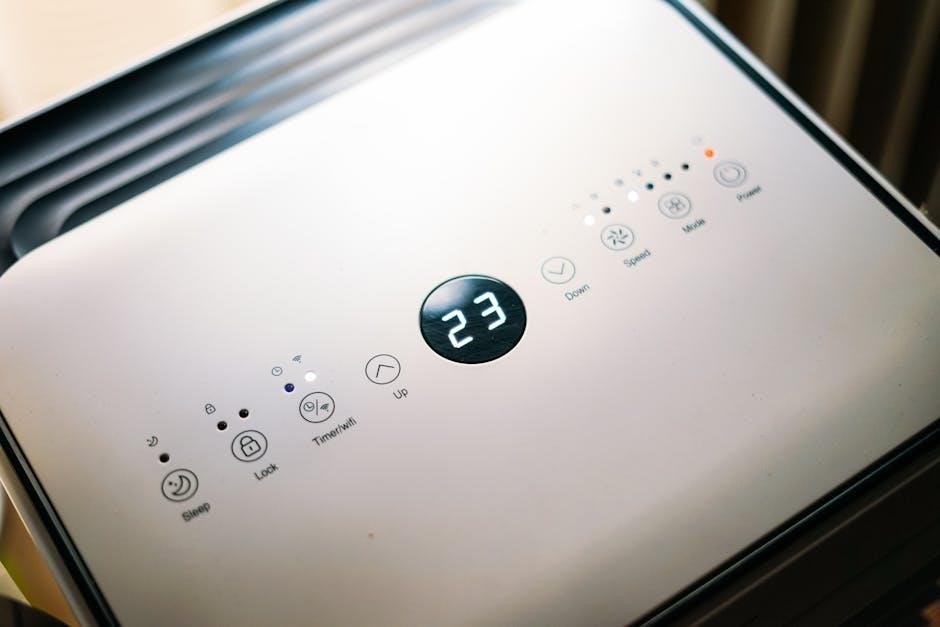
Wireless Remote Control Back Cover Attachment
Properly attaching the back cover of your Kelvinator wireless remote is crucial for maintaining battery contact and protecting the internal components. After installing or replacing batteries, carefully align the back cover with the remote’s body, ensuring the arrows or alignment marks match.
Gently but firmly press along the edges of the cover until it clicks securely into place. Avoid excessive force, which could damage the plastic. A snug fit is essential to prevent the batteries from loosening and interrupting the signal transmission to the air conditioner. If the cover doesn’t close easily, double-check the battery polarity and ensure they are fully seated. A properly secured back cover safeguards against accidental battery dislodgement and extends the remote’s lifespan.
Self-Clean Operation Indicator
Many Kelvinator air conditioners feature a self-clean function designed to remove dust and mold from the evaporator coil, improving air quality and cooling efficiency. During the self-clean cycle, a specific indicator on the air conditioner’s display, and potentially mirrored on the remote, will illuminate.
This indicator, often represented by a fan blade with a water droplet, signals that the cleaning process is active. The remote may not directly control the self-clean function, but it will display its status. The duration of the self-clean cycle varies by model, but typically lasts around 20-30 minutes. Avoid turning off the unit during this process. The display will show the indicator during operation, and it will disappear once the self-clean cycle is complete, confirming a cleaner, healthier cooling system.